
New regulations for doctors

June 24th, 2011 by Cairde No comments »

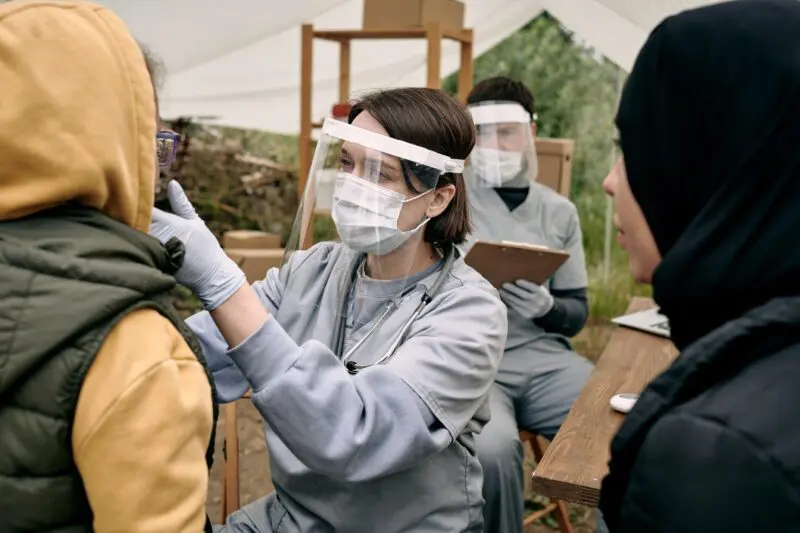
In May 2011, the Medical Council established a new system to regulate doctors’ maintenance of professional competence.  Through this system, doctors are required to keep their knowledge and skills up-to-date by enrolling in professional competence schemes and engaging in relevant activities.  The Medical Council will oversee doctors to ensure that they fulfil this new legal duty, and it has new powers to take action where it is considered that a doctor is not maintaining professional competence.

This is an important change in the work of the Medical Council and will greatly strengthen and modernise its functions to better enable it to protect the public and to drive good professional practise in Ireland.

Patient information leaflet.

Managing Stress Cultivating Happiness

May 25th, 2011 by Cairde No comments »

Free Managing Stress  Cultivating Happiness Workshop series will take place on June, 1st, 8th and 15th from 10am to 1pm in Cairde Balbriggan.

Following the course You will:

1. understand what constitutes stress and its negative effects on emotional and physical health.

2. be able to identify your own individual stressors.

3. become familiar with coping strategies and ways in which they can cultivate overall wellbeing, positive health and quality of life.

LOCATION: Cairde Balbriggan, Old Saint Georges School, Hampton Street, Balbriggan, Co. Dublin.

The course is free. Light refreshments and childcare will be provided.

Places are limited. For more information and to book a place & arrange childcare contact Emilia @ 01-8020785 or email hidden; JavaScript is required


Facts about Cervical Cancer

May 24th, 2011 by Cairde No comments »

Cairde supports the Marie Keating Foundation’s cervical cancer awareness campaign.

The aim of the campaign is to promote early detection and to dispel some of the myths which still abound with regard to Cervical Cancer and Cervical Screening in Ireland. Throughout the month of May, the Foundation’s nurses have been travelling around Ireland on its Mobile Information Units giving free advice on all cancers but with a particular focus on Cervical Cancer. The facts on Cervical Cancer and Cervical Screening are available on www.mariekeating.ie or you can call 01 6283726 for further information.

Cervical Cancer is the second most common female cancer in Europe. A cervical smear test can detect pre-cancerous changes in the cervix which is completely curable. However, if left untreated, these cells may develop into Cervical Cancer. Pre-cancerous cell changes do not usually have any symptoms, which is why it is so important to have regular smear tests- Early detection can save lives. Log onto tellher.ie for more information.

Some of the myths regarding Cervical Cancer and Cervical Screening that are still perceived as fact by some women in Ireland include the following:

-MYTH: Cervical cancer cannot be prevented.
FACT: By having regular cervical smear tests, you can help reduce your chances of developing cervical cancer. This simple test can detect abnormal cervical cells and has greatly reduced cervical cancer deaths in Europe. CervicalCheck – The National Cervical Screening Programme provides free smear tests to women aged 25 to 60. A smear test is a simple procedure that only takes minutes and is the most effective way to detect changes in the cells of the cervix. Log onto cervicalcheck.ie for more information on screening.

All school girls in first year of second level school now get a free vaccine to help prevent cervical cancer. Older girls and women not included in the national vaccination programme may also benefit from vaccination. Your local GP can best advise whether the vaccination is an option for you.

-MYTH: An abnormal cervical smear test means a woman has cancer.
FACT: An ‘abnormal result’ is not cancer. However in some cases cancer may be found when an abnormal test is investigated further. If the results of your cervical smear test are abnormal, your doctor will explain what needs to be done. If the abnormal cervical cell changes are mild, your doctor may simply choose to closely monitor them as the majority of cells may return to normal in further tests.

The Foundation is appealing to women from all over Ireland to speak to the women in their lives about Cervical Cancer and the importance of screening and vaccination, the message is simple – Tell her, it could save her life.

You can also speak to one if Cairde’s Health Advocacy Workers in your own language.


New communication platform within our EMHF Project

April 20th, 2011 by Cairde No comments »

In order to improve Cairde services we are developing a new communication platform within our Ethnic Minorities Health Forum Project. The aim of the platform is insure that relevant materials and information reaches the members of ethnic minorities and organisations working with them.

We plan to send you regular updates in relation to accessing health services in Ireland, your rights and entitlements, policy and awareness campaigns, development of our Ethnic Minority Health Forum and more.

If you wish to receive this information and be included in the communication platform please email Junyu email hidden; JavaScript is required

Cairde Balbriggan Integration Through Common Experience Initiative

April 15th, 2011 by Cairde No comments »

Integration Through Common Experience Initiative is a project initiated by Cairde which aims to create space for integration to happen through events that speak to the needs of all communities in Balbriggan and to develop a focal point for integration in the town by providing minority ethnic communities and longer-resident Irish communities with opportunities  to share common experiences and difficulties.

Currently, working with the Fingal Leader Partnership, Cairde is recruiting participants for a 10 week Community Development and Leadership Training Programme. This course is designed for people living in Balbriggan who are active in their community and who have interest making Balbriggan a better place to live. The course aims to build capacity of local people to be able to address issues which impact on their lives by influencing local policies and design and delivery of local services. Deadline for submitting Expression of Interest forms is April, 30th.

Additionally, in cooperation with local and other partners, agencies and community leaders, Cairde will host a series of information sessions, programmes and workshops for people living in Balbriggan. In May we are starting 6 week Parenting Plus programme. All interested should submit an Expression of Interest Form by April, 21st. On the 1st, 8th and 15th of June we will host a 3 day Stress Management workshop.

For further information please contact Emilia Marchelewska via email email hidden; JavaScript is required or mobile 0877488766.

Workshops in Cairde Balbriggan

April 7th, 2011 by Cairde No comments »

Domestic violence, Positive Mental Health, Physical Activities

During these Health promotion seminars you will learn about:

  • Coping strategies
  • Available support services
  • Mental health issues
  • Recognising domestic violence and addressing it
  • And much more…

Where: Cairde Balbriggan Old St. Georges School House Hampton St. Balbriggan
When: 13th, 14th; 10am-1pm

Workshops are organised by ICF Ireland  is an independent organisation working voluntarily to promote and encourage positive integration of African migrants to the Irish society.

For more information contact Fortune 0871628956 email hidden; JavaScript is required

Work in Cairde

April 7th, 2011 by Cairde No comments »

Cairde is currently seeking to recruit 2 Community Health Workers (Community Employment Scheme)

The key task of the Community Health Worker is to support the work of the Health Information and Advocacy Centre through community development.

Applicants should have some experience (in paid or unpaid capacity) and/or interest in community development and some understanding of issues affecting ethnic minority communities in Ireland. The successful applicant will be encouraged to undertake training relevant to the role.

Applicants must have fluency in written and spoken English, and fluency in one of the other languages, preferably Polish, Romanian, Arabic, Mandarin, Russian or African languages.

This position is based on Community Employment scheme: part-time, 19.5 hours per week, and anyone who wishes to apply should meet the community employment criteria outlined by FÁS.

Closing date for applications is Friday, 22nd of April 2011

For more information


Sexual Health, Fertility, and Motherhood – EMHF 13th April

March 30th, 2011 by Cairde No comments »

As a part of Ethnic Minority Health Forum Cairde will run a Consultation Seminar: Study on Sexual Health, Fertility, and Motherhood for Migrant and Minority Ethnic Women living in Ireland. It will involve a presentation by Catherine Conlon and Joan O’Connor, independent researchers, on the aims and objectives of this study commissioned by the Crisis Pregnancy Programme (CPP) of the Health Services Executive (HSE).

The study aims to explore the views of migrant and minority ethnic women on issues relating to sexuality, fertility, and motherhood.  The research will focus on the knowledge and meanings young migrant women bring to their sexual relationships, sexual health, and reproductive decisions including contraceptive use, pregnancy and motherhood. It will identify gaps and needs in sexual health service provision specific to migrant and minority ethnic women.

It is intended that outcomes from this research will contribute to building multi-cultural competency among service planners, policy makers and practitioners working in the sexual and reproductive health area.

We are interested to hear the views and perspectives of people working in Migrant Rights Organisations, and other individuals who are interested in this topic, on what you consider to be the key issues the study should address. Sexual health services are vital for women’s well-being. Through this research these services in Ireland can be improved to better meet the specific needs of migrant and minority ethnic women. Your attendance at the seminar will allow you the opportunity to inform the development of sexual health policy and services at a national level.

When: 10.30am, 13th April, 2011

Where: Cairde, 19 Belvedere Place, Dublin 1.

Lunch and €5 fee towards transport costs will be provided.

Non-EU parents of an EU citizen child are allowed to live and work in Ireland

March 11th, 2011 by Cairde No comments »

In a major decision on 8 March 2011, the European Court of Justice (ECJ) has decided that third country national parents of an EU citizen child have rights to residence and access to employment in the child’s country of nationality. A refusal to do so would deprive the child of the enjoyment of the rights of citizenship.

The European court case arose in relation to two Colombian nationals, Mr and Mrs Ruiz Zambrano who were refused asylum in Belgium. On 8 March 2011 the EJC has decided that Mr. Zambrano has a right to residence in Belgium and does not need a work permit for employment there because two of his children are Belgian nationals and therefore also EU citizens.

Until 2005 all children born in Ireland were automatically Irish citizens irrespective of the nationality of their parents, though this ceased to be the case following a referendum in 2004. Children born in Ireland to foreign-national parents must now become citizens through naturalisation.

More:


Health issues of ethnic groups in Dublin & Detroit

February 24th, 2011 by Cairde No comments »

On the occasion of the International Women’s Day dr Carla Groh from Detroit, USA spoke at Ethnic Minority Health Forum on the 8th of March, 2011.

Over the past 50 years the Detroit metropolitan area has followed a pattern of change in which the city and its suburbs have become increasingly stratified by race and income.  At the moment Detroit’s population is predominantly African American (81.5%) and the city has the most segregated neighbourhoods in the United States and has the second highest rate of poverty in the nation.

Dr. Groh works as a psychiatric nurse practitioner at the Mercy Primary Care Center for the uninsured & McAuley Health Center in Detroit. Primary care centre is located on the east side of Detroit, the area has the highest poverty level in the city of Detroit, and most surrounding census tracts qualify as medically underserved areas (MUAs). The vast majority of patients who come to the primary care centre are African American (94%) and women (67%) with incomes at or below the federal poverty level (80%).

Dr.Groh does individual therapy with women and men who are experiencing symptoms of depression, anxiety, and who are confronted by various socioeconomic issues. She has implemented several lifestyle change interventions focusing on mental health and obesity.

Dr. Groh has been also at the University of Detroit Mercy since 1996 teaching within all the programs in the College of Health Professions. Her primary teaching interests include research methods, health policy and women’s studies. Dr. Groh’s research interests include women’s mental health, especially the impact of class, race, and gender on mental health. She has conducted research on the adult mother-daughter relationship; adolescent female offenders; the role of hardiness as a mediator of stress in older women; and most recently, the experiences of couples undergoing infertility treatment.